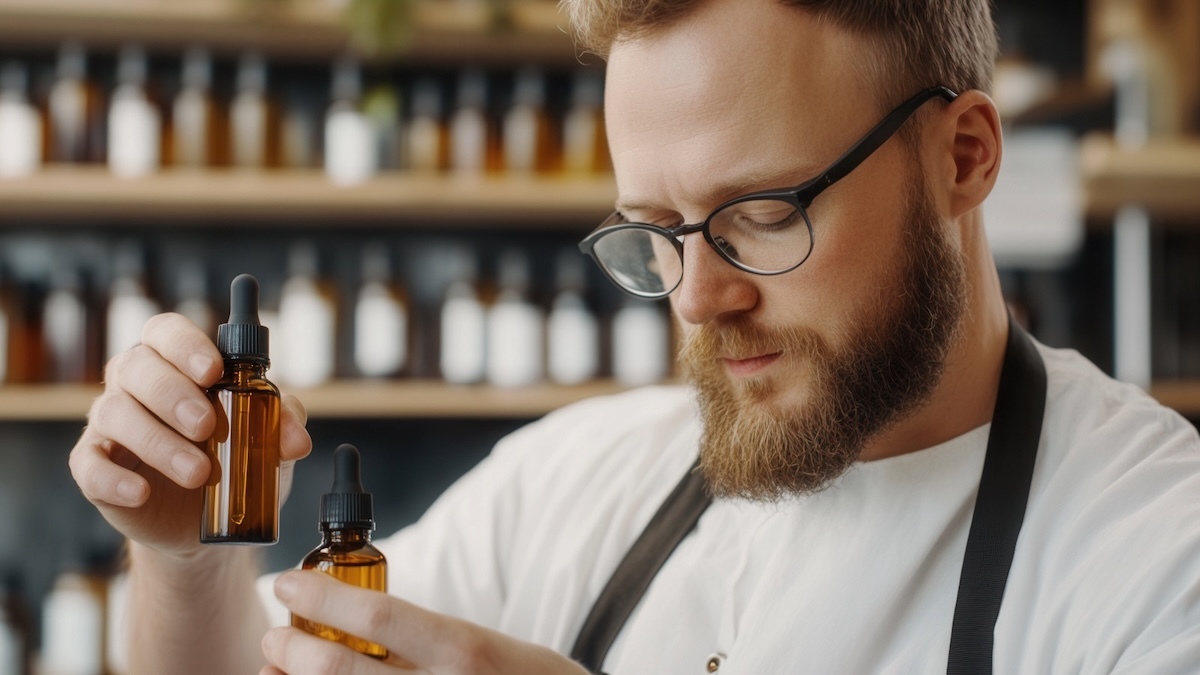
Homeopathy operates on the principle of “like cures like,” where highly diluted substances that would cause symptoms in larger doses are used to treat those same symptoms.
Historical Context of Homeopathy
Samuel Hahnemann established homeopathy in 1796. His methods brought systematic observation to medicine, and his findings led to significant developments in our understanding of healing responses.
This principle can be understood as the original evidence-based medicine. Why? Because the knowledge of using medicines came from an experiment known as a proving.
In this process, known as proving, healthy volunteers took a substance to the point of generating symptoms. This was if you like the ‘proof’ of its therapeutic application to be subsequently prescribed to those suffering from similar symptoms.
The Proving Process Explained
Key elements of homeopathic proving:
- Controlled substance administration
- Detailed symptom documentation
- Multiple participant observations
- Systematic data collection
- Repeated verification processes
Provers, as they were known, were able to describe their experience. The collection and collation of this data from multiple provers gave what was known as a ‘drug picture’, which was like a portrait of prescribing indications.
Understanding Drug Pictures
Drug pictures help practitioners:
- Match symptoms to remedies
- Identify treatment patterns
- Create precise prescriptions
- Track treatment responses
- Build evidence-based protocols
For example, onion or Allium cepa causes excoriating discharges from the nose and eyes, which is now a homeopathic indication for its application.
Common Homeopathic Applications
Additional examples include:
- Apis mellifica from bee venom for swelling
- Arnica montana for bruising and trauma
- Belladonna for fever symptoms
- Chamomilla for teething discomfort
We see in this process many of the hallmarks of scientific thinking:
- Observation of a substance known to have therapeutic value
- Experimentation
- Taking the substance in a healthy individual
- Recording the effects and applying them in practice
Modern Scientific Methods in Homeopathy
Current research methods include:
- Double-blind clinical trials
- Laboratory studies on dilutions
- Systematic reviews
- Quality control in preparation
- Standardised documentation
There are other general instances of this principle:
- Allergic desensitisation therapy with stimulant drugs in ADHD.
- Digitalis both causes and cures heart arrhythmias.
- Too much coffee causes overstimulation. Homeopathic coffea is helpful for some types of insomnia. In this approach, it is the body’s response to the similar stimulus that is restorative.
Parallel Principles in Contemporary Medicine
Similar principles appear in:
- Immunotherapy treatments
- Vaccination protocols
- Hormesis research
- Adaptive response studies
- Stress response patterns
With repeated support in this manner, the system can gently restore immune balance. This is quite distinct from approaches that seek to oppose or suppress the body’s response.
Understanding Immune Balance
Immune balance involves:
- Natural healing responses
- System adaptation
- Gradual improvement
- Long-term stability
- Reduced sensitivity
Homoeopathic formulations seek to mirror the body’s response with a reaction leading to symptomatic relief.
It is important to understand how all living systems respond to stimuli. There is action, the stimulus, and reaction, the response.
Response Mechanisms
The body’s response system:
- Recognises stimuli
- Initiates healing
- Maintains balance
- Builds resilience
- Supports recovery
Applied in this context, the reaction to an opposing stimulus may be to reinforce the symptoms being treated. As such, while these approaches may offer symptomatic relief, they may not resolve the underlying immune hypersensitivity.
This was the first step in a historically novel approach to healthcare, becoming the scientifically validated system of Homeopathy.
Ongoing Homeopathic Research and Development
Current developments include:
- Advanced preparation methods
- Digital symptom tracking
- Treatment outcome studies
- Integration with conventional care
- Personalised medicine approaches
Patient Benefits of Homeopathy
Homeopathic treatment offers:
- Gentle intervention
- Individual treatment plans
- Non-toxic solutions
- Long-term health support
- Preventive care options
Research References
[1] “Scientific Evidence for Homeopathy” – PMC https://pmc.ncbi.nlm.nih.gov/articles/PMC10413079/
[2] Evidence and efficacy of homeopathy – Wikipedia https://en.wikipedia.org/wiki/Evidence_and_efficacy_of_homeopathy
[3] “Scientific Evidence for Homeopathy” | Clinics – Elsevier https://www.elsevier.es/en-revista-clinics-22-articulo-scientific-evidence-for-homeopathy-S1807593223000911
[4] A systematic review of systematic reviews of homeopathy – PMC https://pmc.ncbi.nlm.nih.gov/articles/PMC1874503/
[5] Efficacy of homoeopathic treatment: Systematic review of meta-analyses … https://systematicreviewsjournal.biomedcentral.com/articles/10.1186/s13643-023-02313-2